What Makes Iowa City Garage Floors Hard on Coatings?
Garage concrete takes a beating in Iowa. Road salt, snow melt, oil, hot tires, dropped tools, and daily traffic can leave the floor stained, dusty, and hard to clean. Freeze-thaw cycles can make weak concrete worse when moisture gets into the surface.
A properly installed garage floor coating can turn rough concrete into a cleaner, brighter, easier-to-maintain surface. The system still needs the right prep, repair, flake coverage, and topcoat for daily garage use.
- • Road salt and snow melt from winter driving
- • Hot tires and daily parking
- • Dusting concrete that never feels clean
- • Oil stains and household chemical spills
- • Poor prep from paint or DIY kits
Epoxy, Polyurea, or Polyaspartic: Which Should You Choose?
Many homeowners search for epoxy garage floor Iowa City because epoxy is the familiar term. In practice, local garage floors may use epoxy, polyurea, polyaspartic, or a blend of products. The right choice depends on cure time, install conditions, desired finish, and budget.
Polyaspartic systems are popular for full-flake garages because they cure quickly and hold up well as a topcoat. Epoxy can be a practical base coat in some settings. The key is matching the system to your concrete instead of buying by name alone.
| Factor | Epoxy | Polyaspartic |
|---|---|---|
| Cure time | Often slower, especially in cool weather | Often faster return-to-use |
| UV stability | Can amber in direct UV without the right topcoat | Usually stronger UV stability |
| Cost | Often lower material cost | Often higher material cost |
| Durability | Good when installed over properly prepared concrete | Strong chemical and abrasion resistance |
| Install window | More temperature sensitive | Works across a wider install window |
| Best use case | Budget-aware garages and interior concrete | Fast-turnaround full-flake garage systems |
- • Epoxy: familiar, strong, often slower curing
- • Polyurea: fast-reacting family of coatings
- • Polyaspartic: a type of polyurea often used for garage topcoats
- • Full flake: decorative flakes broadcast into the wet base coat
Full-Flake Systems for Cleaner Daily Use
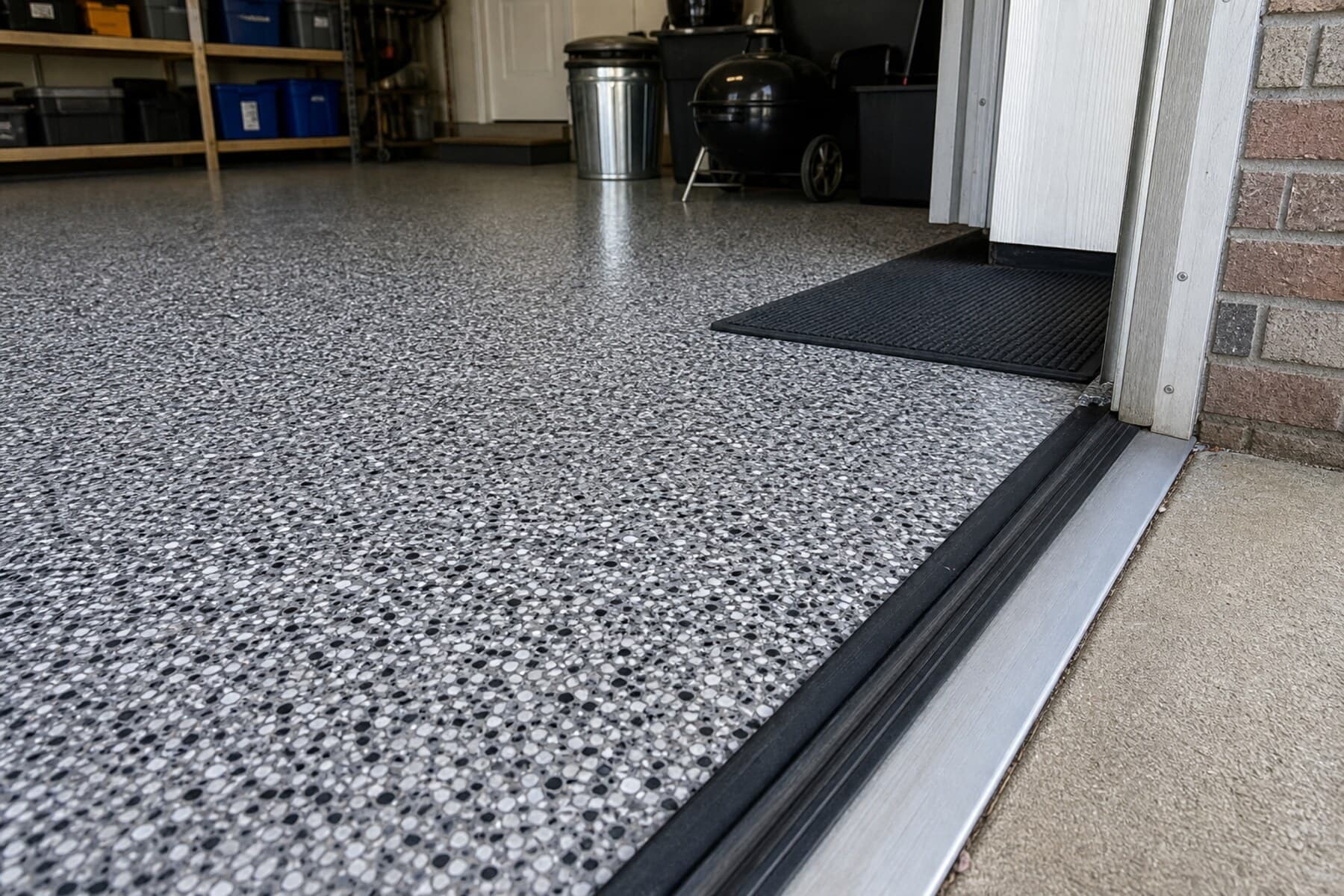
A full-flake garage floor uses decorative vinyl flakes broadcast across the wet base coat until the floor is covered. After cure, loose flakes are scraped and vacuumed, then a clear topcoat locks in the texture.
Full flake helps hide small dust, tire marks, and normal garage wear better than a plain solid color. It also gives the floor a practical texture that can be tuned for cleanability and traction.
- • Hides normal debris better than plain gray
- • Creates a finished look without being flashy
- • Can be paired with polyaspartic topcoats
- • Works well for two-car garages, shops, and utility spaces
Why Floor Prep Decides Whether the Coating Lasts
The coating label matters, but surface prep matters more. Concrete needs to be clean, open, and profiled before a base coat is applied. Diamond grinding removes weak surface material, opens the pores, and gives the coating a better surface to grab.
Prep also includes crack repair, pit filling, edge work, vacuuming, and checking for signs that moisture or contamination could interfere with the bond. A quote should explain the prep plan, not only the coating brand.
- • Diamond grinding instead of a quick rinse
- • Crack and pit repair before the base coat
- • Moisture awareness when concrete looks damp
- • Full-flake broadcast and protective topcoat when appropriate
Crack Repair and Concrete Condition
Small cracks and pitted spots are common in Iowa City garages, especially older attached garages around Iowa City, Coralville, North Liberty, Tiffin, Solon, and Cedar Rapids. Many can be routed, cleaned, and filled before coating.
A coating is not a structural repair. If the slab is moving, heaving, badly spalling, or pushing moisture through the surface, the floor may need more than a standard coating system. A clear inspection keeps expectations realistic.
- • Hairline cracks can often be filled
- • Pitting may need patch material before coating
- • Moving cracks can reappear
- • Moisture issues should be discussed before installation
Garage Floor Coating Cost Factors in Iowa City
Garage floor coating cost in Iowa City depends on the actual floor, not only square footage. A clean newer two-car garage is different from a stained, cracked, previously painted floor that needs coating removal and repair.
The best quote should identify the coating system, prep method, repair scope, flake coverage, topcoat, cure expectations, and any stairs, stem walls, or shop areas. That makes it easier to compare quotes without guessing what is included.
- • Garage size and layout
- • Cracks, pits, spalling, and stains
- • Existing paint or coating removal
- • Epoxy, polyurea, or polyaspartic system
- • Full flake or partial flake coverage
- • Topcoat chemistry and texture
Questions to Ask Before Hiring a Garage Floor Coating Company
A good garage floor coating quote should be easy to understand. Ask how the floor will be prepared, what repairs are included, what coating system is used, how flakes are broadcast, what topcoat is applied, and when the garage can be used again.
Avoid comparing only the lowest price. A thin coating over poorly prepared concrete may look fine for a short time, then peel near hot tires, salt deposits, or old stains.
- • Will the concrete be diamond ground?
- • How are cracks and pits repaired?
- • Is the floor full flake or partial flake?
- • What topcoat is included?
- • When can I walk and park on it?
- • What should I do before installation day?
Maintenance After Installation
Coated garage floors are easier to clean than bare concrete, but they are not maintenance-free. Sweep grit, rinse salt, wipe oil, and avoid dragging sharp metal across the surface. In winter, cleaning road salt helps protect both the coating and the rest of the garage.
For normal use, a soft broom, microfiber mop, mild cleaner, and water are usually enough. Harsh solvents and abrasive pads should be avoided unless the installer recommends them.
- Step 1
Empty the garage
- Step 2
Grind concrete
- Step 3
Repair cracks and pits
- Step 4
Apply the base coat
- Step 5
Broadcast flakes
- Step 6
Scrape loose flakes
- Step 7
Apply the protective topcoat
- Step 8
Cure before normal use
Serving Iowa City and Nearby Communities
This site helps homeowners compare garage floor coating options in Iowa City and nearby communities including Coralville, North Liberty, Tiffin, Solon, Cedar Rapids, Marion, Washington, and Muscatine.
Use the quote form to describe your floor and the type of system you are considering. Photos of cracks, stains, and old coatings can help narrow the scope before an in-person estimate.
Need a quote for your actual floor?
Concrete condition changes the best coating plan. Share the size, city, cracks, stains, and old coating details before comparing options.